

Not Everything Green Is Good
You’d be forgiven for thinking everything’s fine.
The bank is lush. Bees are humming. Wildflowers bloom in pink and white. The path ahead is overgrown, full of life.
But look a little closer and you’ll start to see something else.
Shallow roots. Monocultures. Collapsing edges where the soil gives way to the water. A river struggling beneath the weight of plants that don’t belong.
This is the quiet story of invasive non-native species on the River Annan (and pretty much every other river in the UK). It’s not dramatic and it’s not always visible. But it’s one of the biggest challenges we face in restoring the health, stability, and biodiversity of our river systems.
The Problem You Can’t Always See
The Annan River Restoration Project is about repairing relationships between water, woodland, wildlife, and people.
We’re aiming to protect the river from rising temperatures, increasing erosion, habitat loss, and the cumulative damage of decades of neglect. But even as new trees are planted and pathways repaired, some invasive plants are quietly unravelling that work as it happens, because they thrive too well in the wrong places.
They weren’t always seen as a problem. Himalayan balsam was brought here for its beauty and bee appeal. Skunk cabbage still lines ponds and garden centres. Japanese knotweed came as a hardy ornamental. Some were even planted with good intentions, as ground cover, food for pollinators, or pond life.
But these species don’t belong here.
And their flourishing success is not a sign of river health, it’s a warning.
What Exactly Are Invasive Non-Native Species (INNS)?
Invasive non-native species (INNS) are plants, animals, or fungi that have been introduced to the UK (sometimes centuries ago) and have since escaped into the wild and done pretty well for themselves.
Not all non-native species are invasive, some stay contained. But those that spread aggressively, displace native species, and damage the environment are considered invasive.
Here’s what happens when they take hold on a riverbank:
- Erosion increases as root systems fail to hold the soil
- Biodiversity shrinks, even when the riverbank looks “green and healthy”
- Pollinators lose their native food sources and foraging patterns shift
- Sediment clouds the water, affecting fish spawning
- Restoration planting becomes harder, slower, and more expensive
It’s the illusion of nature but without the balance. It’s not supposed to be like this.
But Wait – Aren’t Some of These Plants… Useful?”
Yes, they’re not all bad,and that’s what makes this story more complicated than it seems.
Some you can eat: Himalayan balsam is rich in nectar – bees love it, especially in late summer when few other flowers bloom. And the seeds are great for foraging too, (nutty and peppery – some even use them in chutneys and curries). Not to mention “popping” the seeds is something that kids like doing.
Japanese knotweed shoots are edible as well, with a tart, rhubarb-like flavour. It also contains resveratrol – a compound studied for its health benefits
Some are rather aesthetically pleasing too: American skunk cabbage brings impressive early colour and fragrance to wet woodland and attracts early season pollinators. Giant hogweed, toxic as it is, remains a favourite for wildlife photography.
A Word of Warning: Do Not Spread These Plants! While it’s interesting that some of these plants are edible or aesthetically pleasing, it’s critical to avoid moving any part of them. The seeds of Himalayan balsam can be spread easily by touch, and small fragments of Japanese knotweed can re-root and start a new infestation. This is why it’s vital to handle them with extreme care and avoid taking them from the wild.
And New Zealand pigmyweed is tough enough to filter wastewater, and thrives in aquariums – where it really should have stayed!
But usefulness in one context doesn’t equal value in an ecosystem. These plants upset that balance in a way that undoes years of river restoration, sometimes in a single season.
The Five Key Invaders Along the Annan
Let’s take a closer look at the main species we’re tackling:
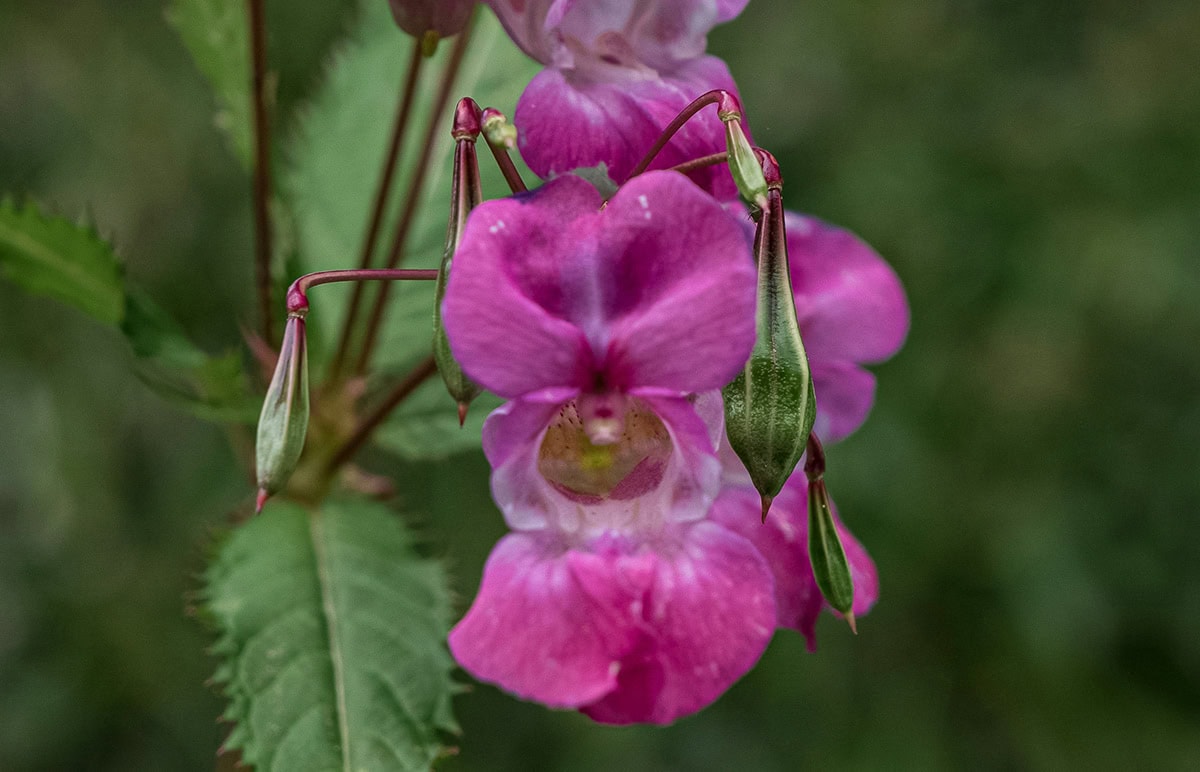
Himalayan Balsam (Impatiens glandulifera)
It looks like a wild snapdragon, beautiful, tall, and full of nectar. Originally introduced in the 1800s, it’s now a dominant force along the River Annan and many of its tributaries.
Why it’s a problem: It grows faster than native plants, forming dense stands that block sunlight and eliminate competition. Its roots are shallow, offering no winter protection to riverbanks. When it dies back, the bank collapses – and the soil washes into the river.
What we’re doing:
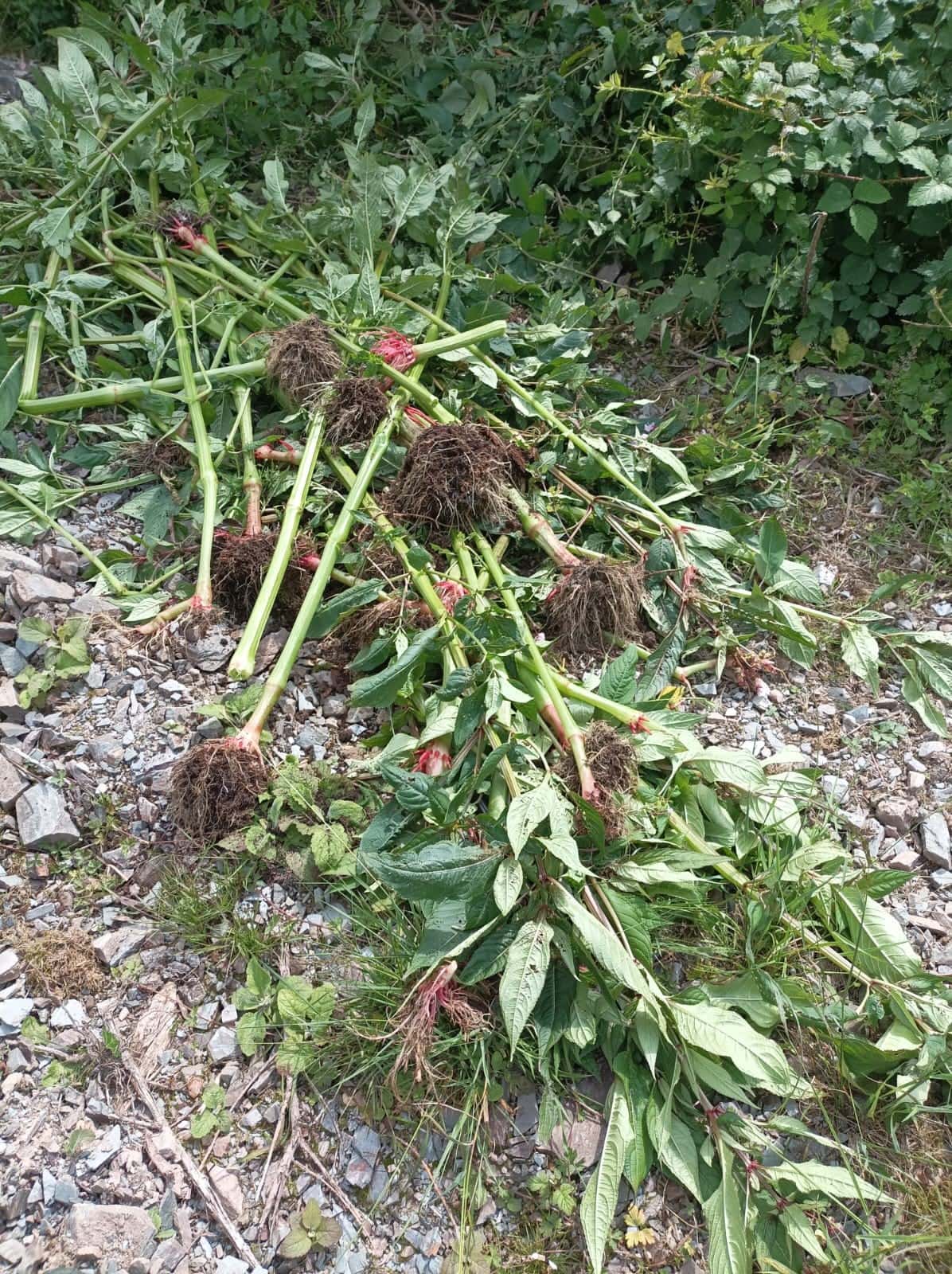
- Organising balsam bashing sessions – pulling the plants by hand before they set seed
- Leaving them to dry on-site in safe places where they can’t re-root
- Involving schools and volunteers, because this is a battle everyone can help with
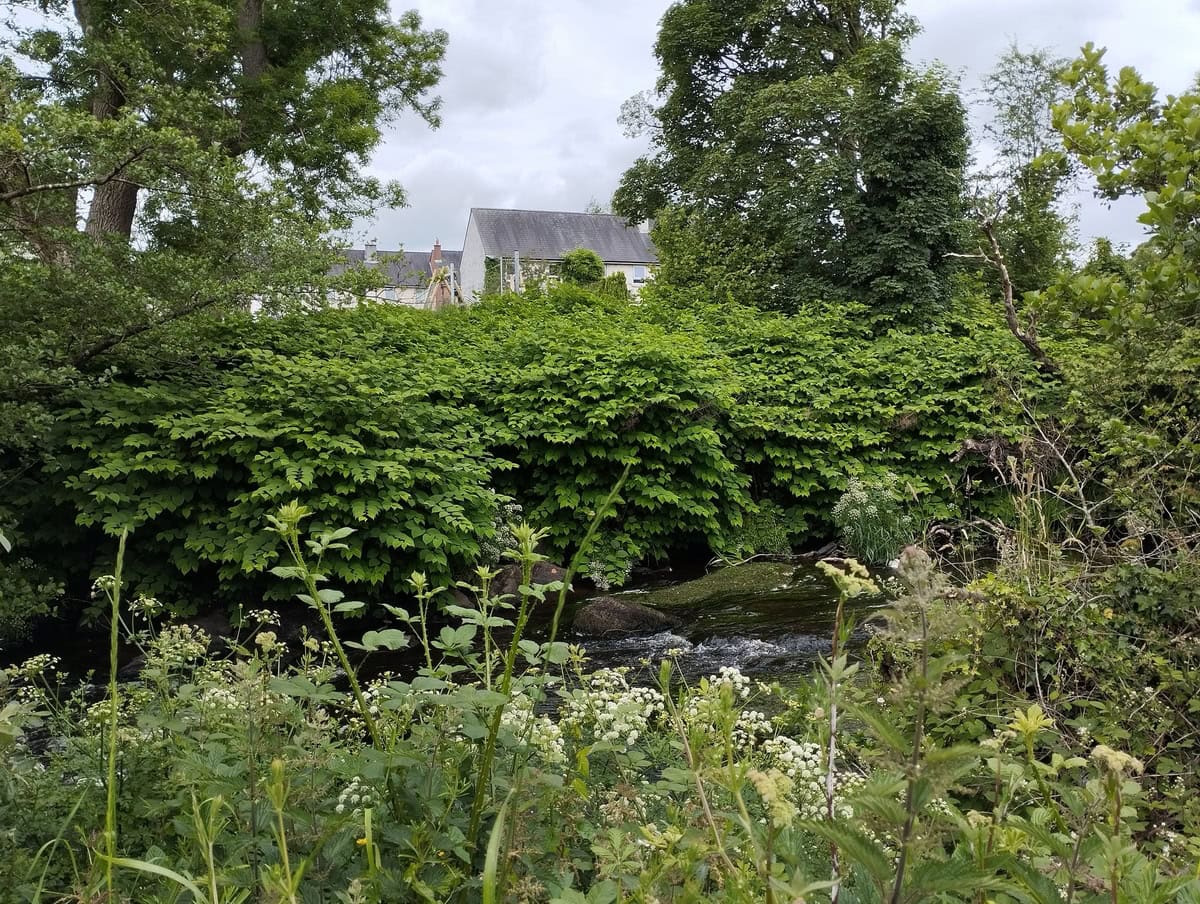
Japanese Knotweed (Fallopia japonica)
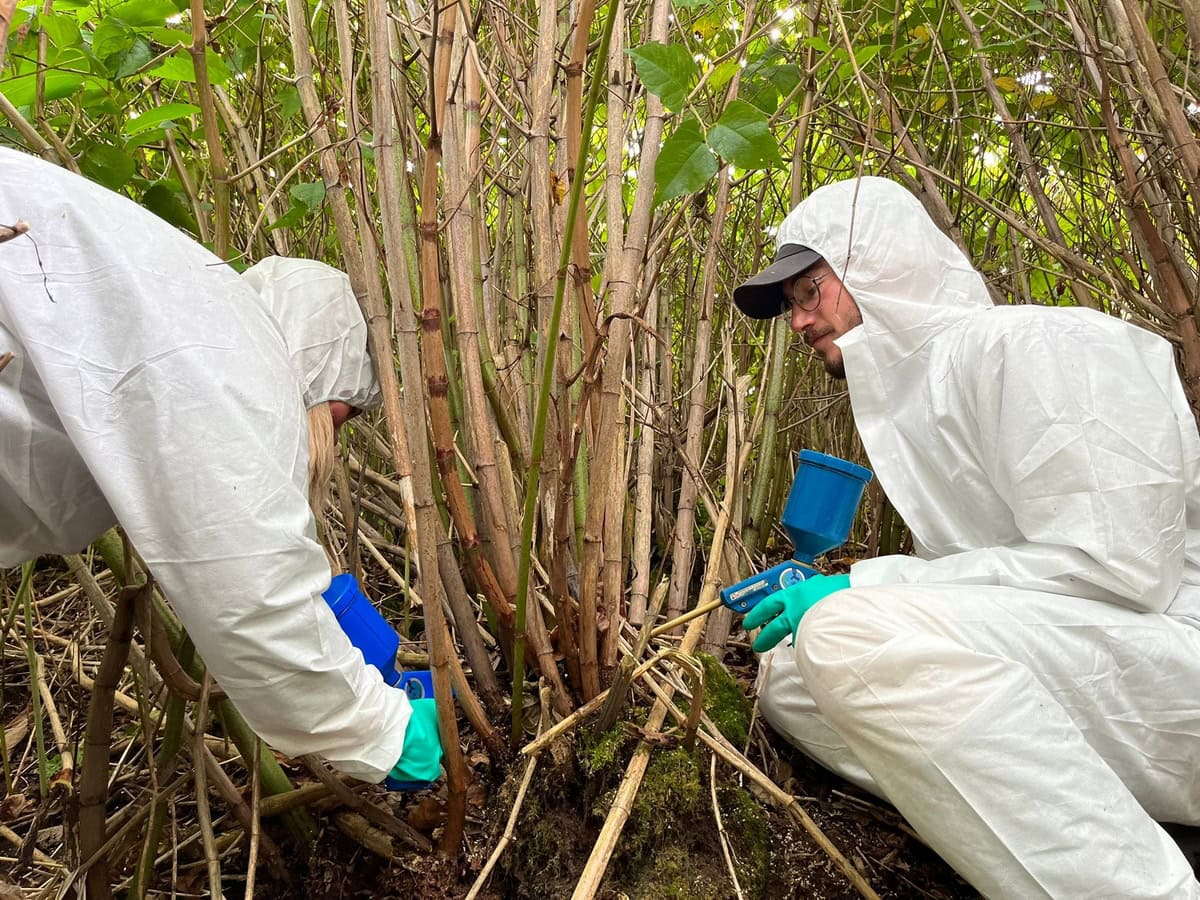
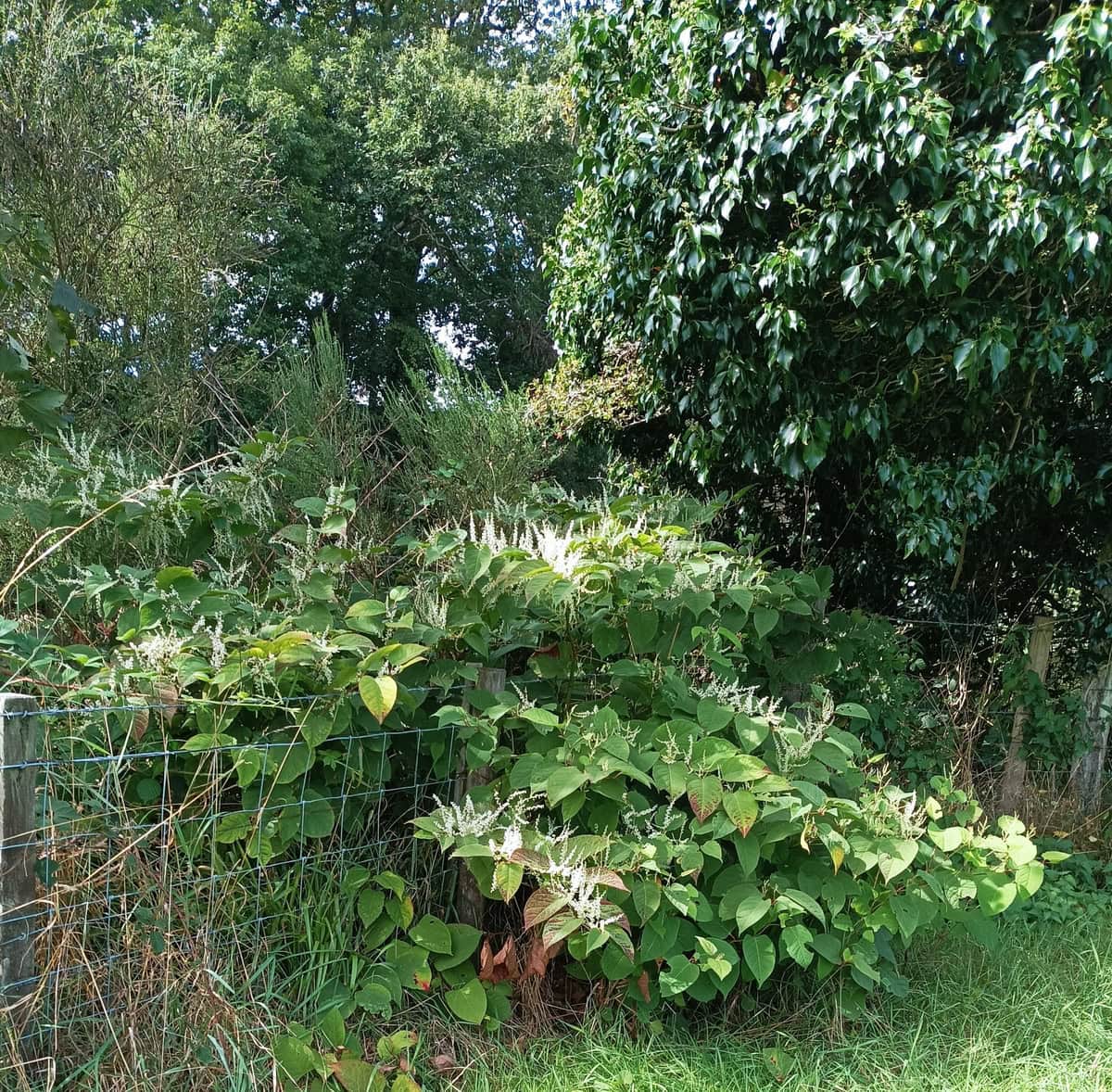
A tall, bamboo-like plant that thrives in disturbed soil and grows via powerful underground rhizomes. Once it’s in, it’s really hard to get out. It can take over entire stretches of riverbank, and has been known to completely engulf churchyards too.
Why it’s a problem:
Knotweed breaks through concrete, roadways, flood defences and riverbanks. It alters soil chemistry, crowds out every other species, and offers virtually no habitat or food for native wildlife.
What we’re doing:
- Using specialist herbicide treatments over several years
- Mapping its spread and working with landowners for coordinated removal
- Emphasising early detection – even a tiny piece can restart an infestation
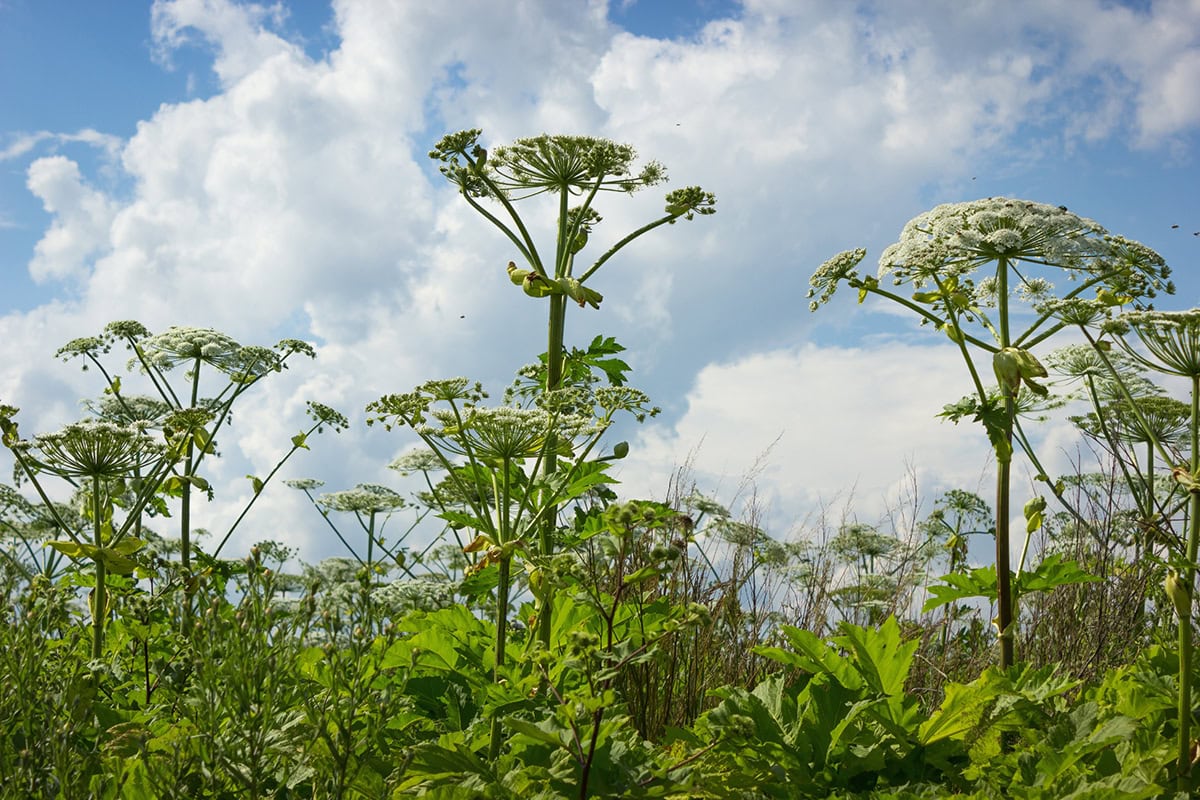
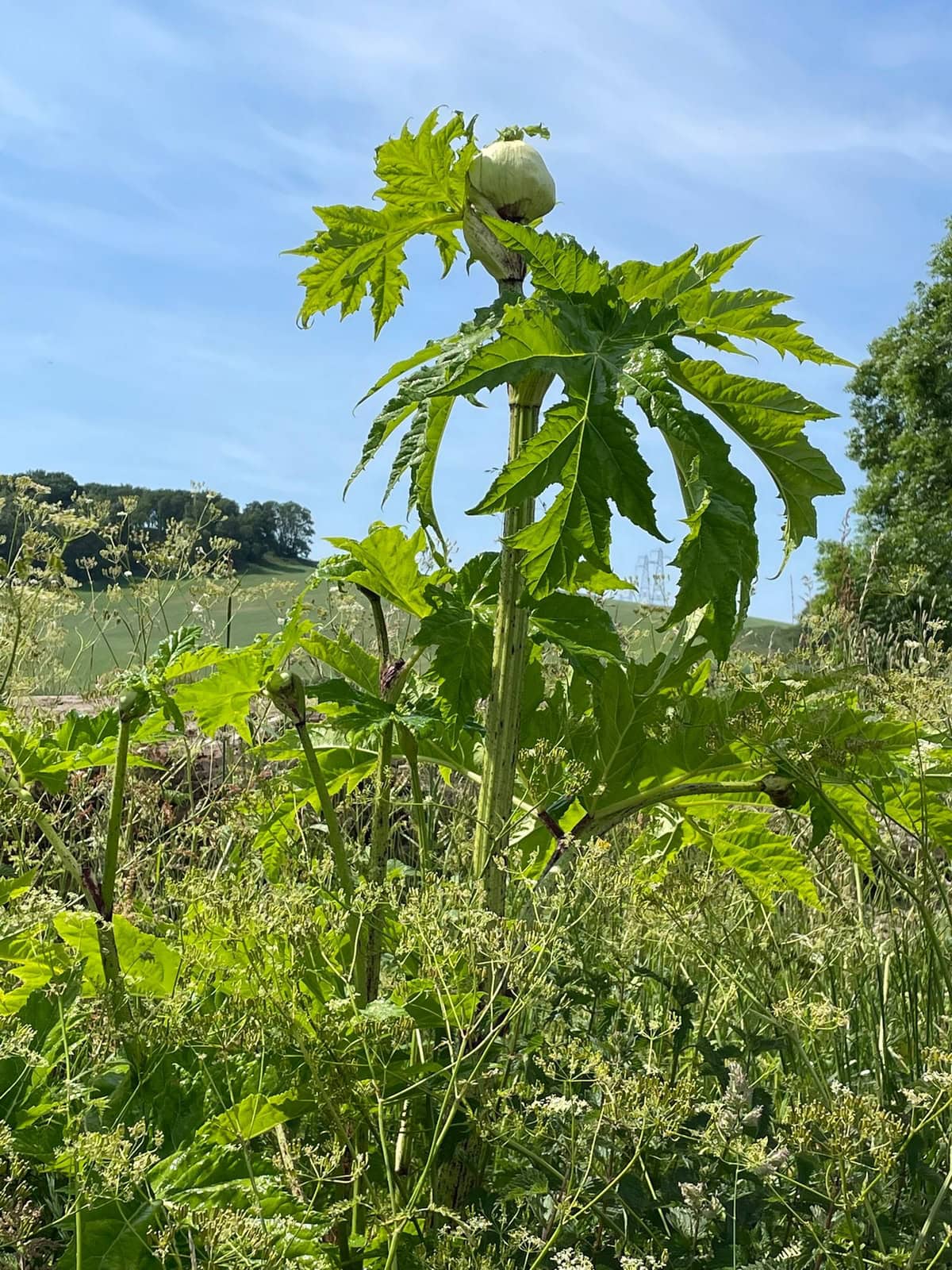
Giant Hogweed (Heracleum mantegazzianum)
It looks like oversized cow parsley – tall, striking and architectural. But this plant comes with a warning label.
Why it’s a problem:
Its sap reacts with sunlight and causes burns, blisters, and long-term skin sensitivity. It also spreads aggressively and, like balsam, dies back in winter – leaving unstable, eroding banks.
What we’re doing:
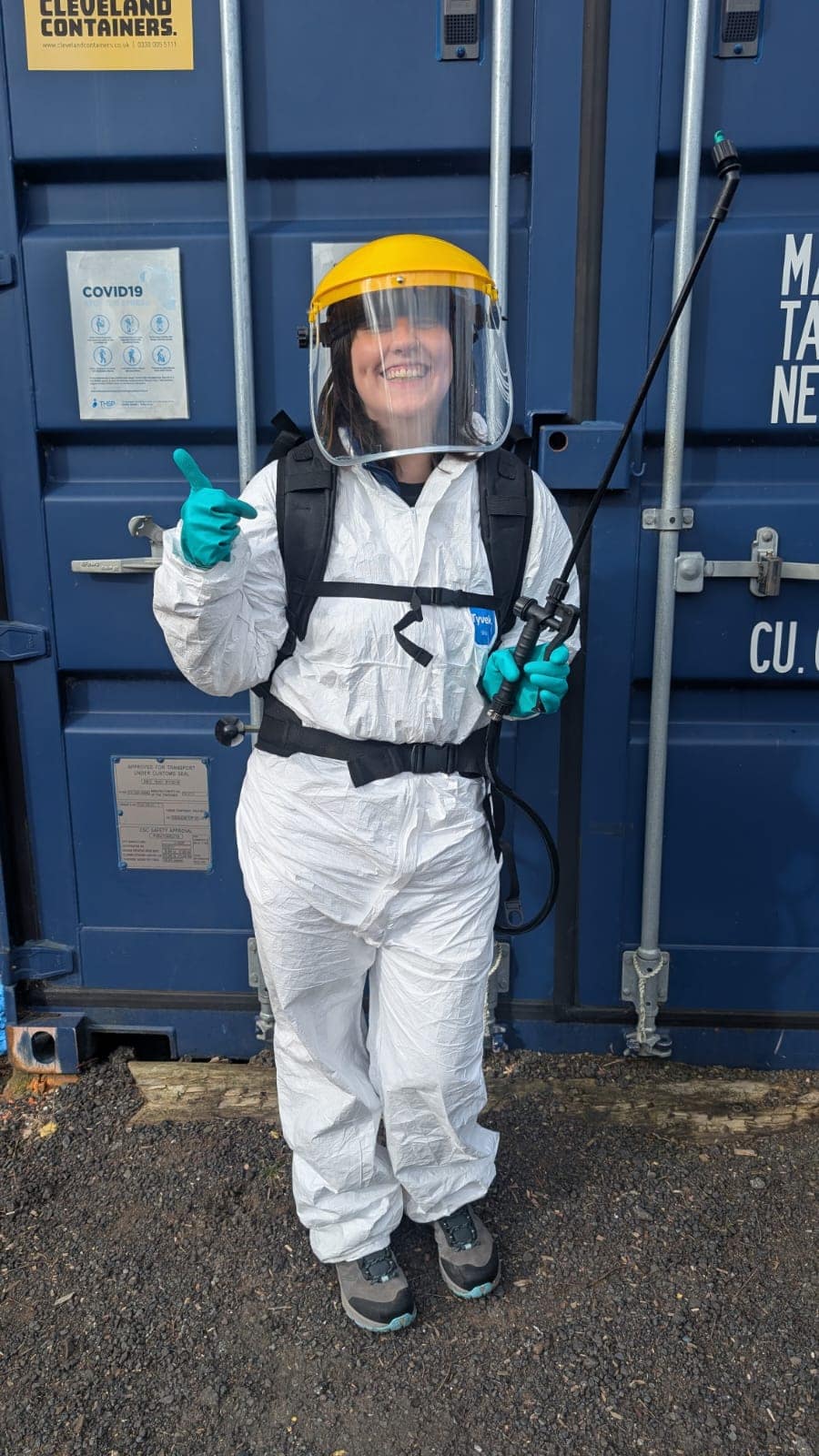
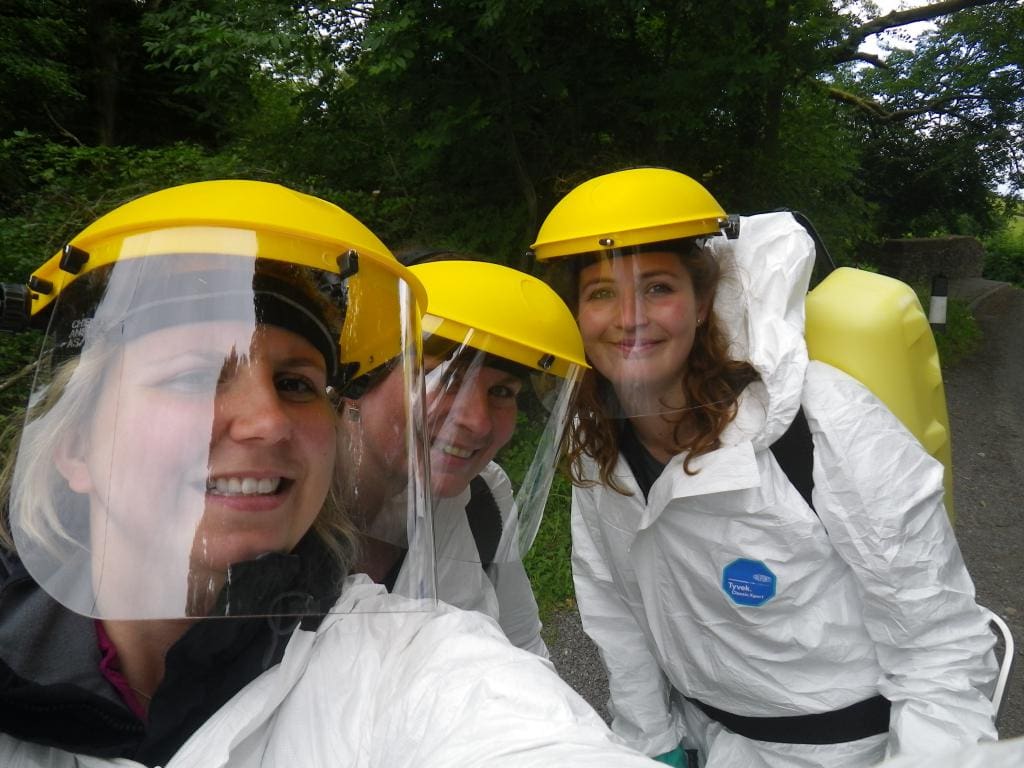
- Working with trained contractors using full PPE
- Prioritising high-risk sites near footpaths and public areas
- Controlling it before it flowers and sets seed

New Zealand Pigmyweed (Crassula helmsii)
Tiny, creeping, and often overlooked, but devastating underwater. This aquatic invader forms thick mats in ditches, ponds, and slow-flowing water.
Why it’s a problem:
It blocks sunlight and oxygen from reaching native aquatic plants and insects. It can survive drought, frost, mowing, and even some herbicides – making it extremely difficult to control once established.
What we’re doing:
- Focusing on prevention – stopping spread from ornamental ponds
- Educating landowners and communities on proper disposal
- Encouraging early reporting before it takes hold
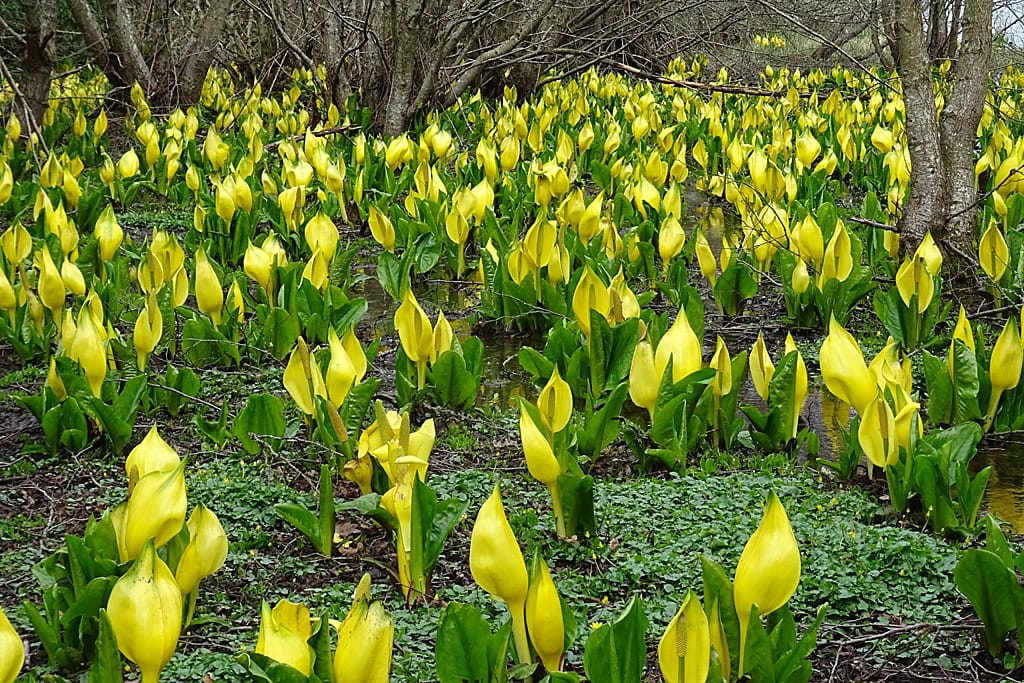
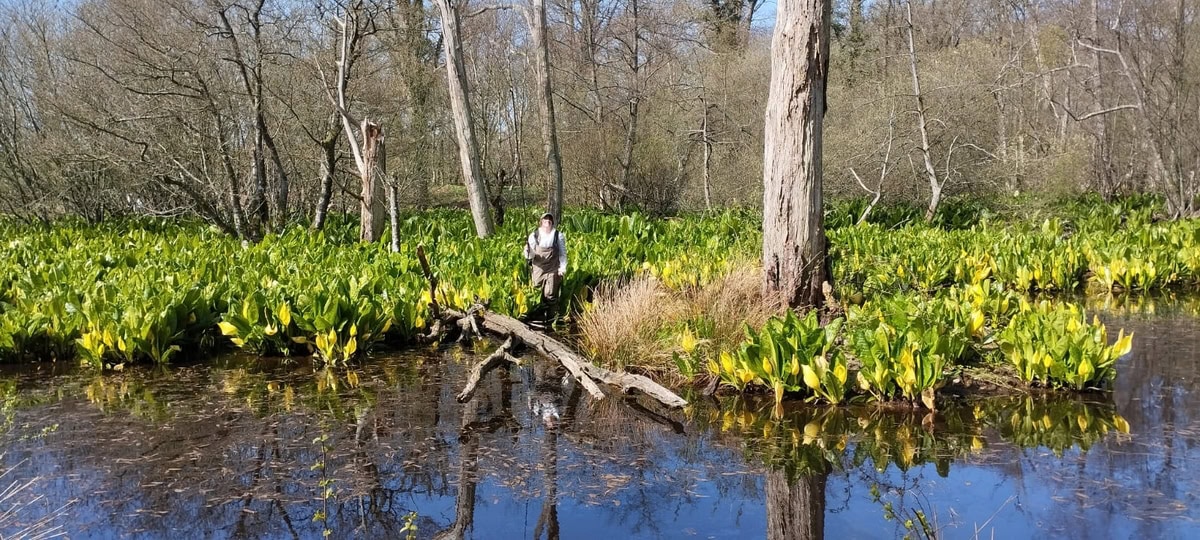
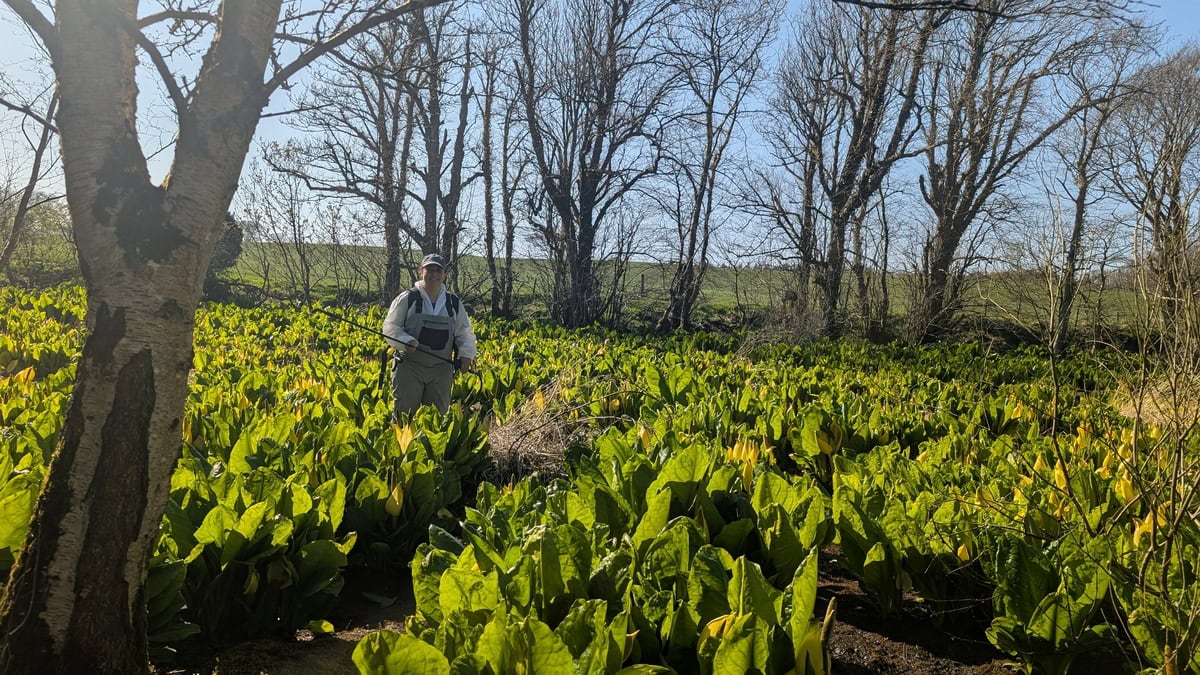
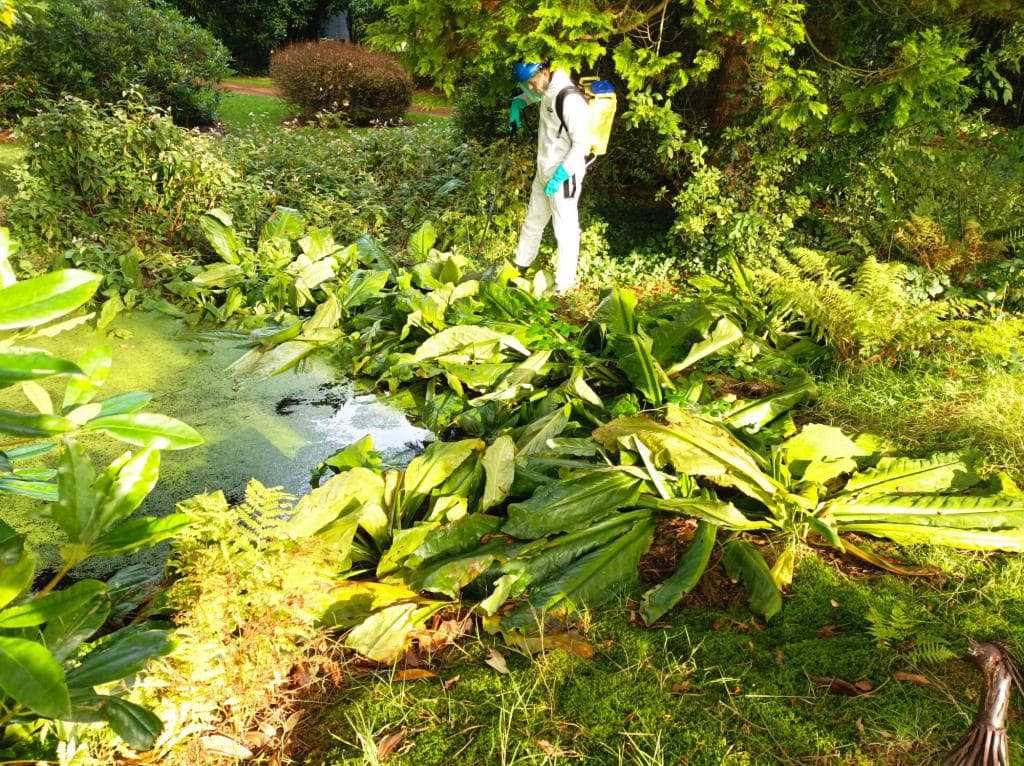
American Skunk Cabbage (Lysichiton americanus)
Large, leathery leaves and a skunky scent make this a distinctive presence in wet woodlands. It’s ornamental but highly invasive.
Why it’s a problem:
It smothers native wetland flora, alters water retention and soil conditions, and spreads rapidly, forming dense ground cover that blocks all other growth.
What we’re doing:
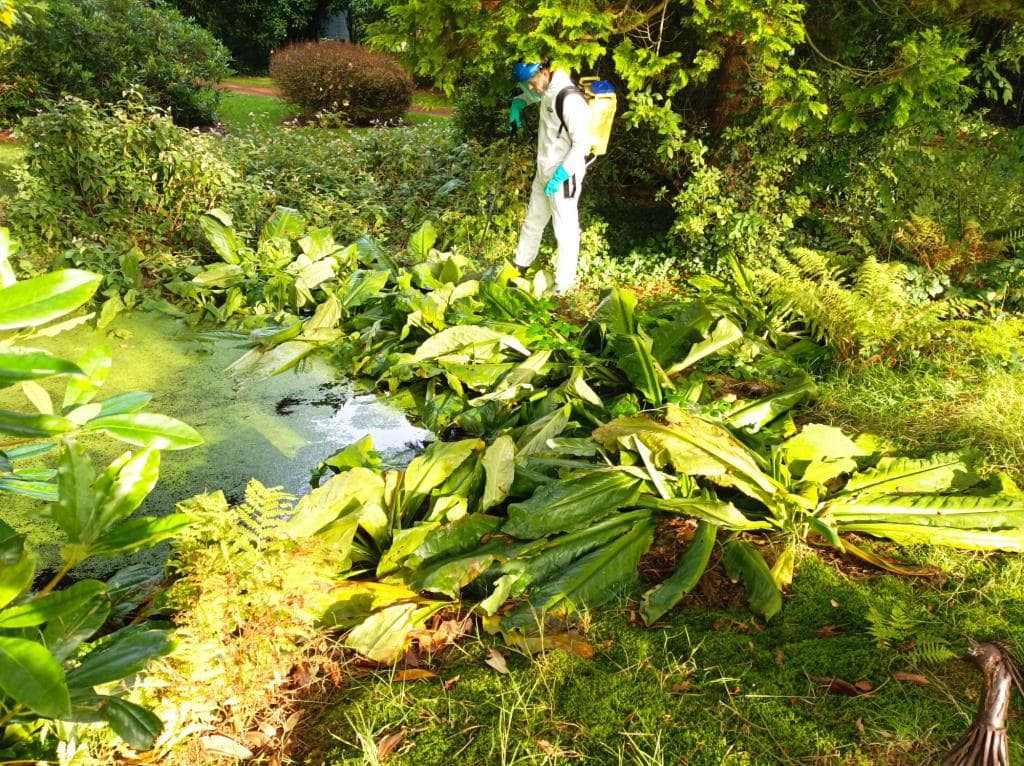
- Manually removing small patches, roots and all
- Using herbicide treatment in larger infestations
- Monitoring sites like Glassoch Burn and Aquavitae Burn to prevent spread into priority areas
“Why Bother?” A Fair Question!
It’s easy to think: “These plants are green. They’re thriving. Isn’t that what nature does?”
And you’re not alone. Many people ask:
- “Isn’t this just nature adapting?”
- “Shouldn’t we leave ecosystems alone to balance themselves?”
- “Isn’t it a waste of time and money that could be best spent on potholes or something?”
Here’s why we should bother about it:
- Because we caused the problem.
These species were introduced by people, and the ecosystem isn’t equipped to deal with them. It requires our intervention to set it right. - Doing nothing guarantees decline.
Left unchecked, invasive species outcompete native plants permanently. The longer we wait, the harder (and more expensive) it becomes to restore anything. - Control works, when it’s strategic and sustained.
On the Kirkcudbrightshire Dee, balsam was cleared from entire catchments with seasonal pulling and community action. Native plants returned. Banks stabilised. And every year the job got easier, not harder.
And here’s why it matters to the river environment:
Invasives aren’t just wild, they’re unbalanced:
It’s easy to think of these plants as ‘just nature doing its thing,’ but the truth is more complicated. They flourish without the natural checks and balances they would have in their native habitats. It’s a huge disruption that pushes native plants and animals out.
It’s not a fair fight. They’re erasing what’s already struggling. Himalayan balsam pushes out dozens of native plants that pollinators and insects actually evolved to depend on. Skunk cabbage chokes wetlands that support birds, amphibians, and trees.
They are ecological “winners” in a game where no one else gets to play.
They undo the work of restoration:
- You plant trees – then knotweed strangles them.
- You stabilise banks – then balsam dies back, leaving them to collapse.
- You protect fish habitat and the pigmyweed reduces the oxygen.
They’re a barrier to resilience:
A healthy river can handle climate stress. One overrun with invasives can’t.
INNS control is one of the few things we can actually fix and see results fairly quickly.
Restoring salmon runs, repairing decades of erosion, reversing pollution – those are long, slow fights.
But pulling balsam, stopping the spread of skunk cabbage, mapping knotweed before it gets worse are tangible, visible wins.
Restoration isn’t about “winning” in a single season. It’s about tipping the balance back little by little until the river can hold its own again, and it’s making a difference that everybody can get involved with.
What GFT Is Doing About INNS
Everything we do to restore the River Annan – planting trees, stabilising banks, cooling the water, protecting fish – relies on getting the foundations right.
That means removing the plants that are undoing our work faster than we can complete it. So we’re:
- Making the river more resilient to climate change
- Giving native species the chance to thrive
- Protecting biodiversity for future generations
- Restoring balance to a system that looks fine ( until you look closely)
So controlling invasive non-native species (INNS) isn’t just a nice idea – it’s already happening elsewhere, and it works.
The Galloway Rivers Trust (GFT) launched the Scottish Solway INNS Control and Knowledge Programme, beginning with a two-year pilot (Phase 1) in 2022.
This laid the foundation for Phase 2, which runs until 2027 with support from the Nature Restoration Fund, National Lottery Heritage Fund, and Kilgallioch Wind Farm Community Fund.
Here’s what we’re doing:
- Surveying, mapping, and treating infestations across seven river catchments, focusing on the species doing the most harm.
- Retaining a full-time INNS Project Officer (Tracy) and recruiting seasonal interns to support ground work and data collection.
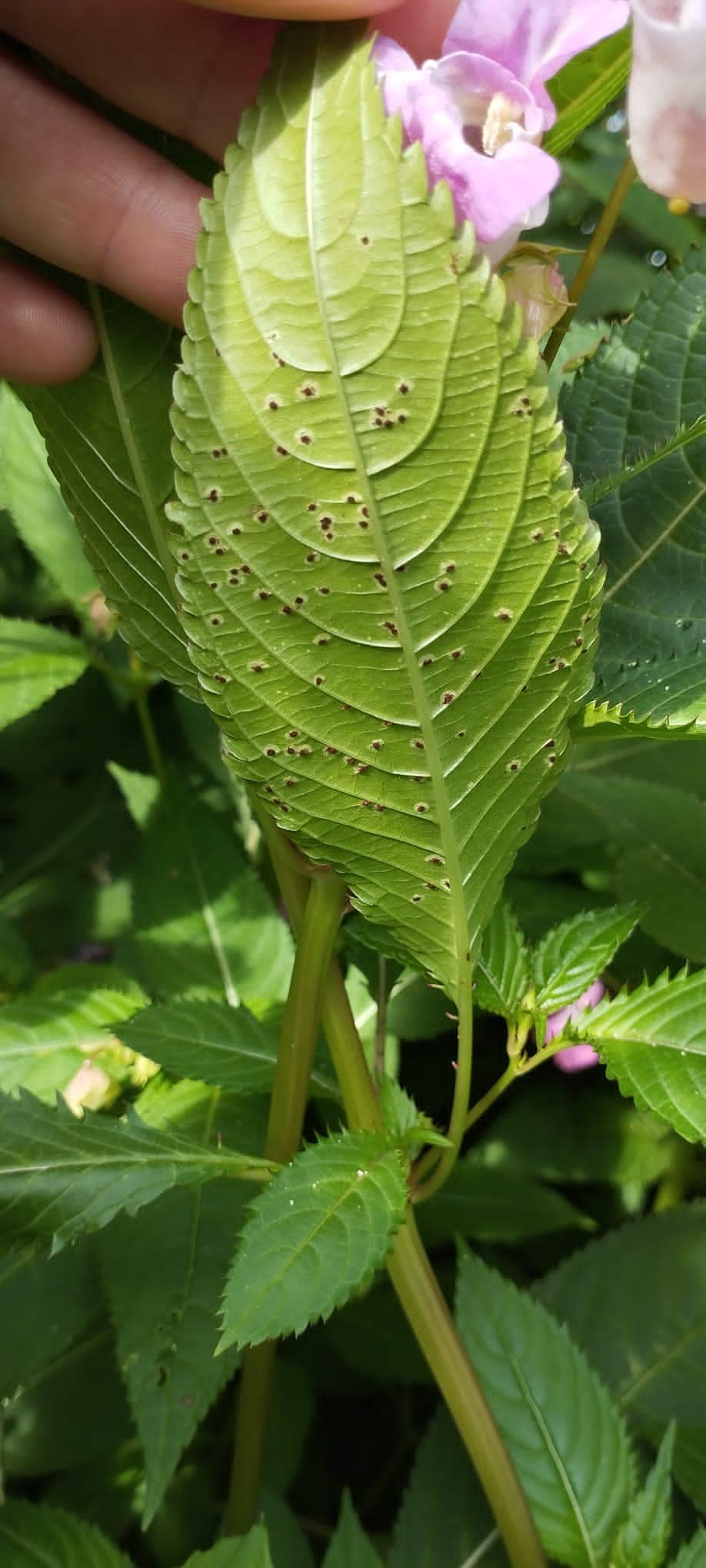
- Trialing new methods of eradication, such as a rust fungus trial on the Annan.
This fungus exclusively targets Himalayan balsam, helping us to deplete large infestations that are currently too big to pull out by hand.
This innovative approach allows us to make progress in areas that were previously unmanageable.
- Providing contractor support to treat large, difficult areas that require professional input.
- Partnering with landowners and communities to coordinate control efforts and spread awareness.
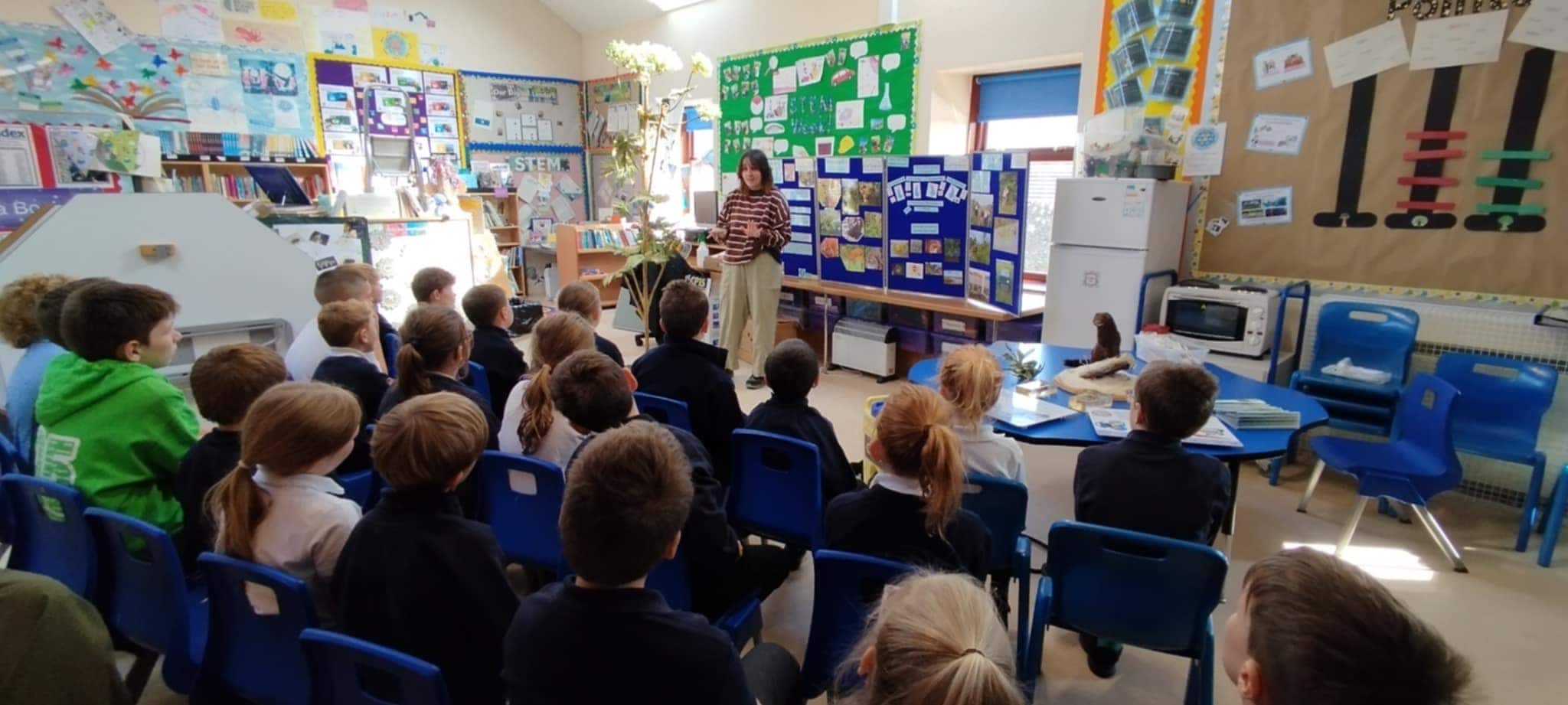
- Working with schools to build long-term biosecurity knowledge and hands-on understanding of how invasives spread and how to stop them.
- Setting up biosecurity stations (e.g. around Loch Ken) to prevent aquatic species like signal crayfish from spreading.
- Delivering the Biosecurity Plan for the Kirkcudbrightshire Dee – a model being extended into the River Annan restoration.
What You Can Do to Help
Did you know less than 1% of the UK government’s £250 million biosecurity budget goes toward tackling invasive species?
That’s a tiny percentage towards battling the growing risk to British wildlife, rivers, homes, and green spaces.

So people power isn’t optional – it’s imperative! Here’s how you can make a real, local impact:
- Join a local balsam bash
Himalayan balsam is shallow-rooted and easy to pull by hand. Local “bashing” events are practical, fun, and a great way to protect riverbanks while meeting like-minded people. - Report what you see
If you spot invasive species like Japanese knotweed, giant hogweed, or skunk cabbage, log it using the Plant Tracker app. Early detection saves months of work later. - Volunteer with GFT
We welcome local volunteers. Whether it’s clearing plants, helping with surveys, or supporting schools and events, your time directly strengthens river recovery efforts. - Clean your boots (and your dog’s paws)
Seeds and fragments of invasive species spread via boots, tyres, and animal fur. A quick rinse before and after visiting riverbanks makes a surprising difference. - Don’t compost invasives
If you’re tackling invasives on your own land, never add them to compost. Leave them to dry and die in the sun, away from any watercourses. And its important to note that it’s illegal to dump invasive species or garden waste, as this is a common way new infestations begin. - Start conversations
Most people don’t know how serious INNS are – but when they learn, they care. Share what you’ve seen, ask questions, or invite others to take part. - Adopt a patch
Long-term progress comes from consistency. Some volunteers “adopt” a stretch of river or path, returning to monitor and manage it each season – a great model for community-led care.
Get in Touch:
If you’re interested in volunteering or want help tackling INNS on your land, get in touch Heather Ridgway at Heather@gallowayfisheriestrust.org