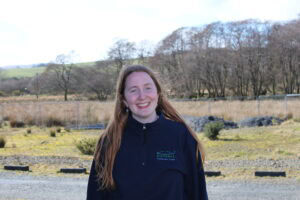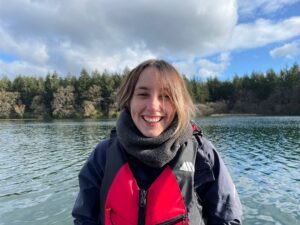


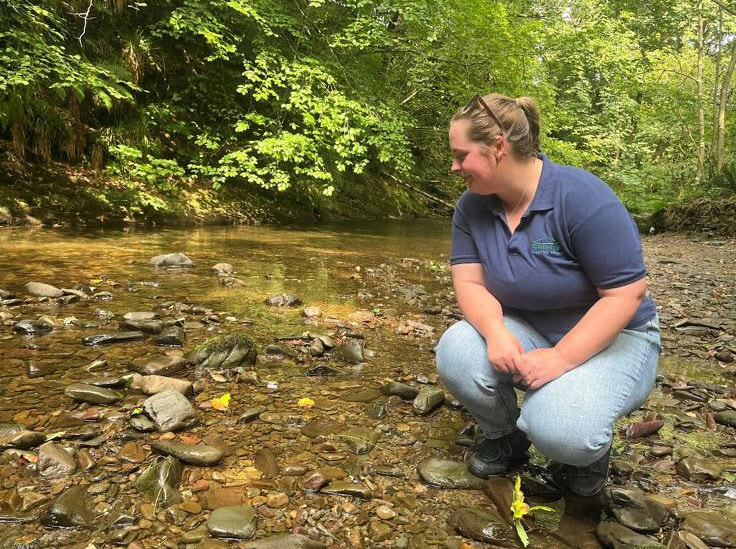
Continuing our staff interview series, we spoke with marine biologist Emilie Wardhaugh, who co-leads the project with Heather Ridgway, about her role and what inspires her work.
Can you introduce yourself and tell us about your position with Galloway Rivers Trust?
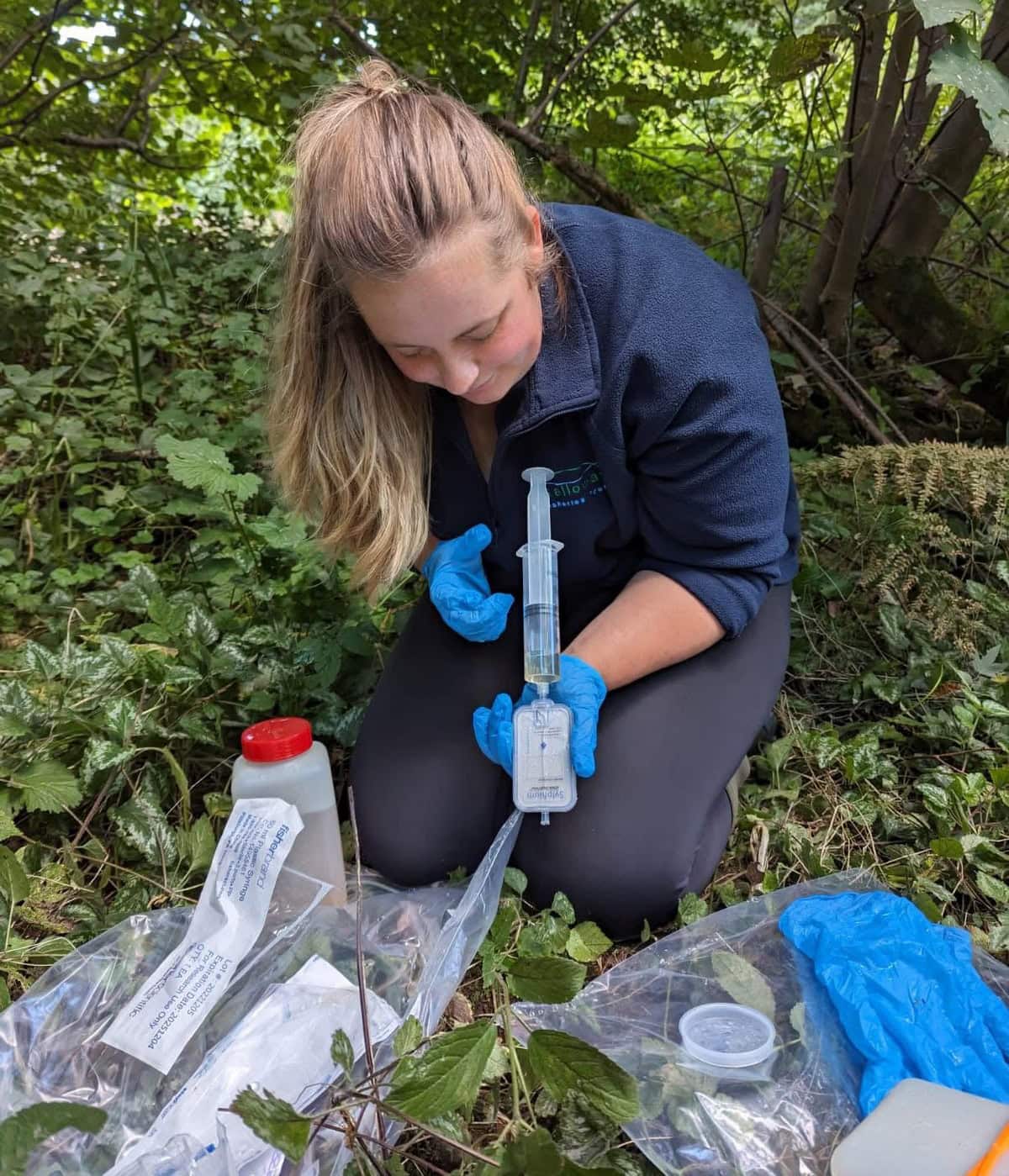
My name is Emilie Wardhaugh and I’ve been part of the Annan Restoration Project at the Galloway Rivers Trust since the beginning – we’ve had three stages so far and I’ve been here for all of them. I’ve currently taken over as co-manager of the project with Heather Ridgway, doing all of the behind-the-scenes work, surveys, that sort of thing.
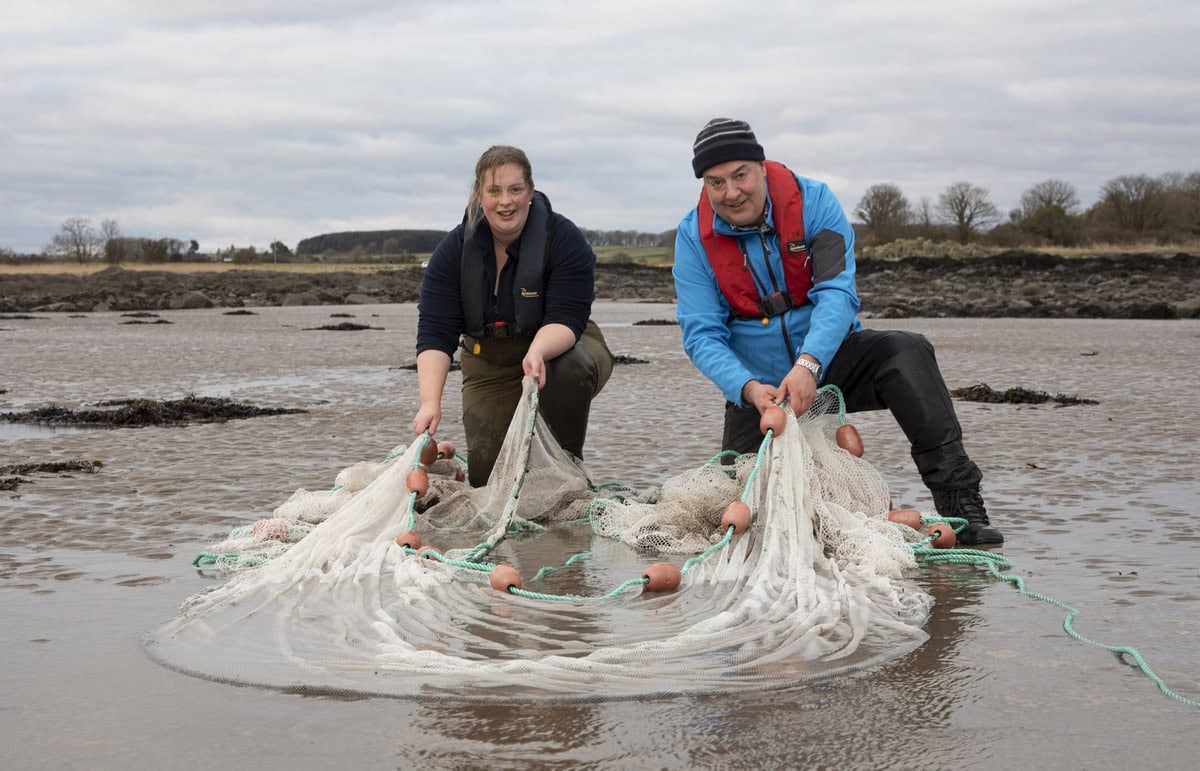
As well as the River Annan Restoration Project, I’m also the lead on the SCAMP project (Solway Coastal Marine Project) as the marine biologist.
That’s working on the same things we do in the River Annan Restoration Project, but on a coastal scale – habitat restoration, water quality, even private finance. So they’re very transferable skills into the project.
I’m interested in how marine biology and freshwater link up. They’re all connected. It’s really important to understand what happens in inland rivers to get a better grip of what’s happening in the sea.
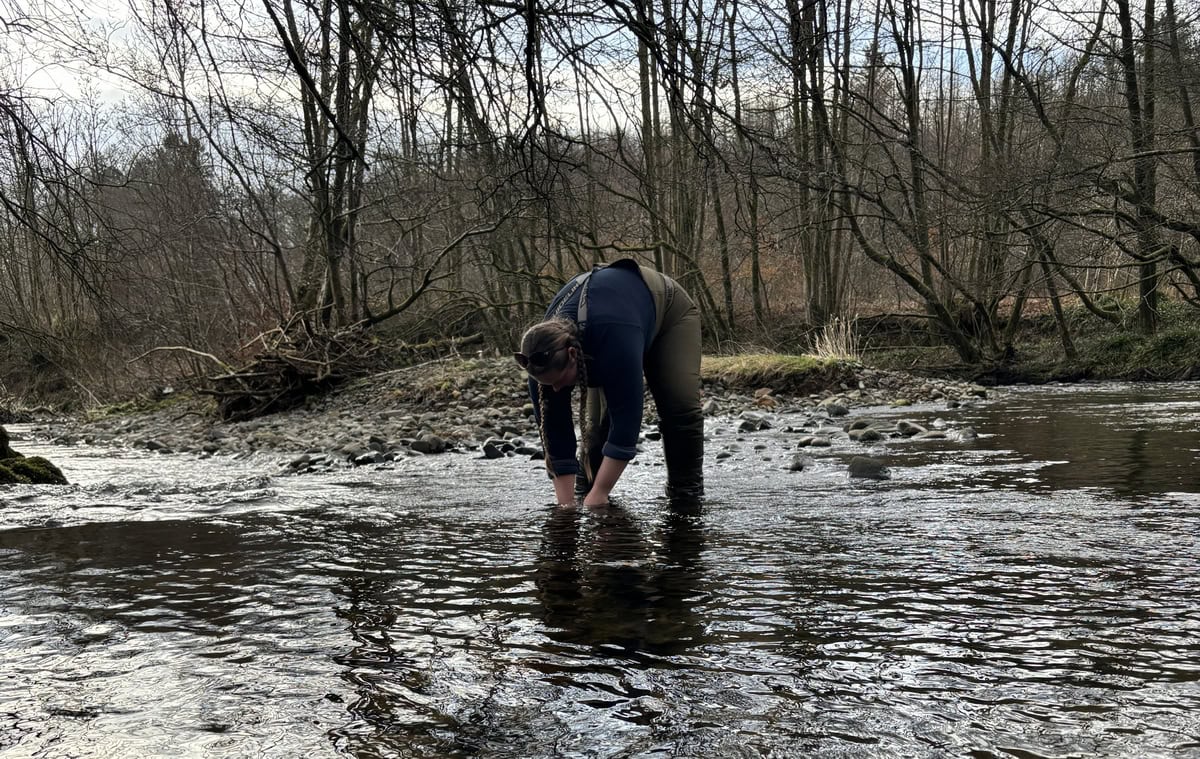
What was your path into the role you’re in now?
I did a degree in marine biology, then a masters, and then I got an internship with Galloway Rivers Trust about two years ago.
But it wasn’t totally straightforward. Halfway through my degree, I had a baby. I took a year out and then come back in later. He’s now six. That actually made me want to work harder because I had someone who relied on me. I needed to work hard for this little one so he’d have a good life and the exposure to nature that I had growing up.
Part of the reason I applied for the internship at Galloway Rivers Trust is that I’m from the area, so it meant I was close to home, but also it was a job I loved, working with a freshwater charity doing environmental work.
I did six months as an intern, then another six months as an assistant biologist, then I was kept on for 12 months to help with the FIRNS project mainly, and also to do water quality work on the Annan. It was all very connected to the River Annan project.
After that 12 months, we got the SCAMP funding and I became the marine biologist, but I still work on all the things I worked on before.
MARINE-FRESHWATER CONNECTION & PROJECT GOALS
If there’s a problem inland with the rivers, does that have a direct knock-on effect to marine biology and the species that use the rivers?
Yes, it can. We have lots of migratory fish species in the UK – Atlantic salmon is probably the one you’ve heard most about. Salmon spawn in freshwater.
So if there are water quality issues or loss of habitat in freshwater, then they’re going to lose their spawning ground, which means they’re not going to be able to lay their eggs safely. The eggs could get washed out, or it could be too acidic for them to develop. Then there won’t be smolts heading out to sea, so there’ll be fewer fish going out.
When they’re in the sea, there are also lots of things that climate change can cause issues with. It really is about balance – having a good environment in the sea, but also having a good freshwater environment, so they’ve got somewhere to spawn and grow before they head back out.
Are these some of the things you hope to address with the project?
Yes, these are the kinds of things we’re targeting with our habitat restoration plans. Water quality can be impacted by agricultural runoff, and one of our main focuses is planting riparian trees and creating a better riparian corridor and wetland areas. That acts as a filter for the nutrient-rich runoff – it gets filtered out by all the plant matter, the roots, the trees. Those plants take it up, so not as much goes into the river.
Other things are more climate-resilience oriented. Re-meandering means you’re making more shelter spaces for fish to stay if it gets too flooded, and deeper pools for when droughts get bad and the river dries up – you’ve still got deep water for the fish to live in.
Tree cover keeps water temperatures cool. That’s another thing that can really affect the fry, the eggs, and fish – if water temperatures are too high, it can damage them at that vulnerable stage.
What aspect of the project excites you most?
When I started with the River Annan project and the habitat restoration work, I came into freshwater from marine work. The things you do in marine and freshwater are very different – the techniques you use, the surveying that you do.
The habitat restoration side and the climate resilience is something where we can really make a difference. In the sea it’s a bit harder to make such a big difference – you’re making a difference to one bit, but you can make a difference to a whole river catchment.
I think it’s the scope and the scale. I just love being outside, being in nature, being by water.
EDUCATIONAL OUTREACH – PHILOSOPHY & IMPORTANCE
You’re very much into educational outreach. How do you see the next generation benefiting from this work?
I’m really passionate about educational outreach and influencing the younger generation to become passionate too about their environment, where they grew up, and nature around them.
One of the things I’ll never forget is we’d done this really fun day on the beach with kids, and at the end of the day one of them asked, “Can I come here with my parents? Is this free?” It shook me to my core. It’s so important for kids to know that nature spaces are free, that you can come and enjoy it in your own time.
I feel really strongly about the River Annan project in particular because it’s the river I grew up on. I had a brilliant quality of life because of the river.
I think it’s really important that we make sure we don’t lose that in the next generation and that they can have the chance to grow up like that too.
Do you think kids (and adults) have become more disconnected from nature?
Absolutely. One of the key goals of community engagement is bringing people back to nature and helping them rediscover things they’ve forgotten or never learned.
When you come from that place of understanding and knowing, it’s easier to influence other people as well. If they understand that nature is there for good, it’s there to help them, which plants are safe and which aren’t, then they get more from it.
And crucially, if they don’t understand, they won’t have the same level of care.
If you have a generational disconnect, where nature knowledge isn’t passed down, might it be up to children to start educating adults again?
Totally. I think that’s especially true after the pandemic. COVID had a big impact on people’s connection with nature, especially for kids who didn’t go out and play with their friends. I think parents and kids got disconnected and it’s hard to connect it back up.
But these kids who are so passionate and keen that they’re going to drag their parents out to the beach or riverside – that just makes my day.
Teaching young kids is a massive passion for you.
Yes. I think it’s really important that they don’t lose the connection to nature, that we as humans stay in balance.
But I also find that the same approach you use with toddlers can help to win a landowner over. They’ve maybe just never looked at it from a different perspective before. They’ve always looked at it as “water on my land is a bad thing, I need it off so I can plant my things.”
EDUCATIONAL OUTREACH – PRACTICAL DELIVERY
What does a typical school session look like?
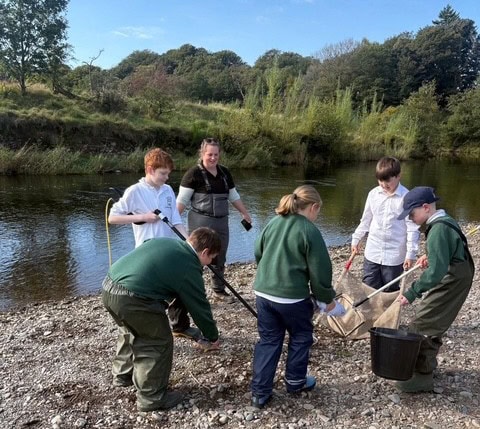
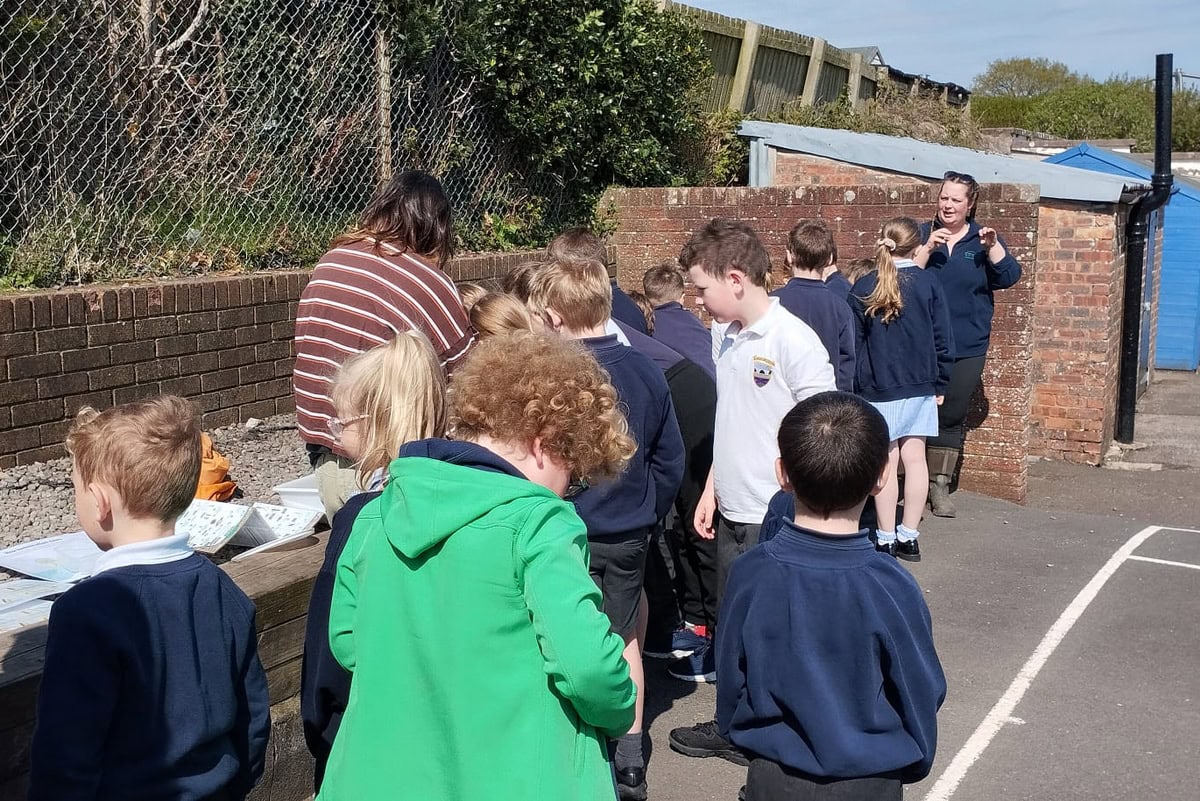
We do have games that we do inside that revolve around our invasive species programme if it’s wet or raining. But a typical day would look like me going out in the morning with a team from work, maybe catching a few fish, doing an invertebrate sample, and then taking them along with us.
The children have got live things to look at and learn about because it holds their attention so much better.
We’d also take along our kit and give them a demonstration of how it works, what we do. At one school, we took along some trees and shovels and planted trees in their garden. We can really adapt to give them a range of what we do in a day and see which part they like the most.
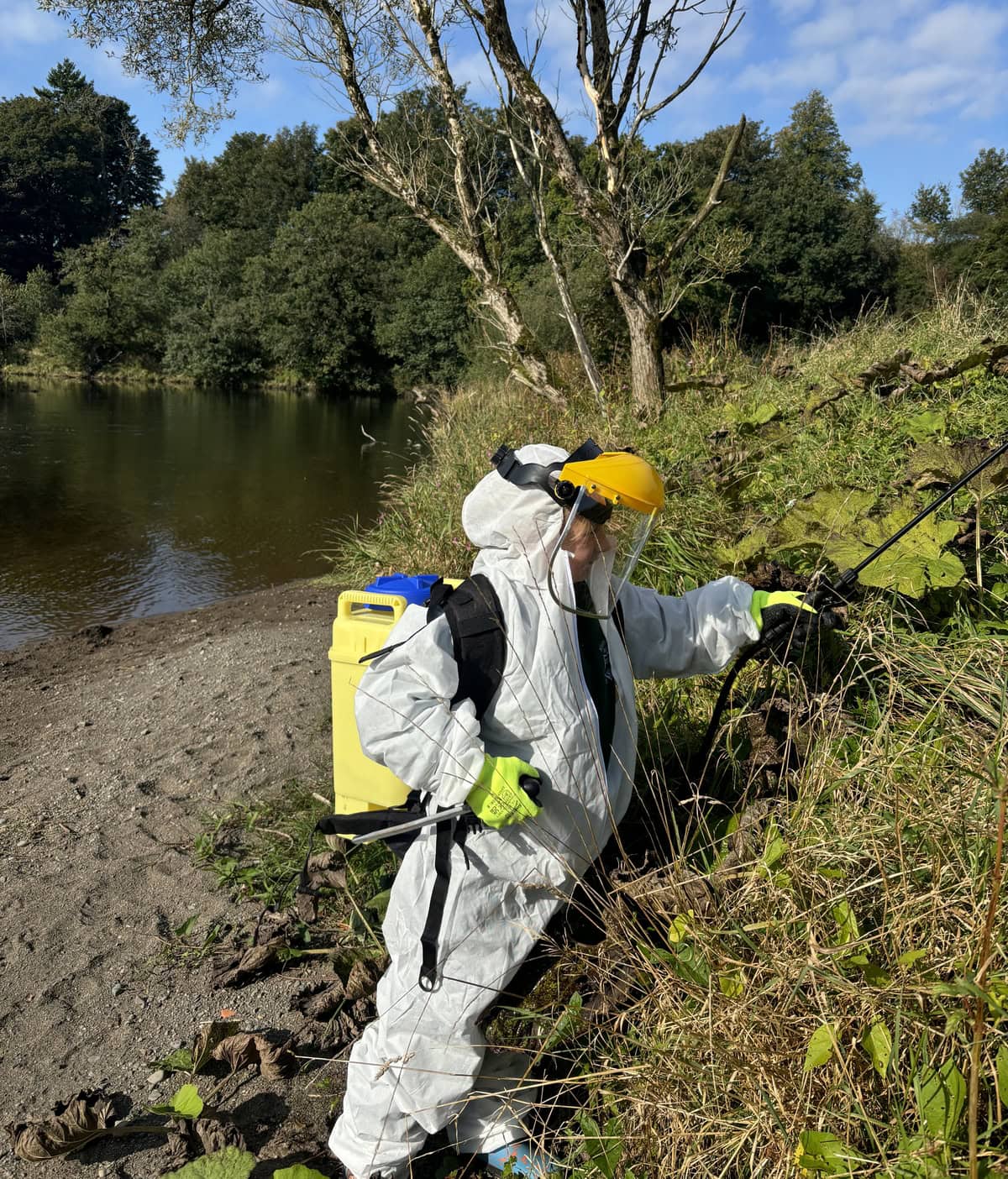
A lot of the kids really like the invasive species spraying. We fill a demo backpack with water and they get to go around and pretend to spray things. It’s really good fun. It’s also a chance to play dress-up. At the last one we took along waders and things and let them try on what we would wear, just be part of the team.
Sometimes we take them into the playground, but the last two sessions we took them right down to the river. Their school was close to a safe place near the river where there’s a big gravel bar, so you could set everything up – it’s also teaching them how to be safe around nature.
Is the message that yes, it’s there to be explored but it’s also under risk. So it’s up to them to help make this safe and secure for themselves and next generations?
We have to look after it or we’ll lose a lot of it. And it could be less safe as well. A lot of the climate change impacts are things like erosion of banks where the banks are getting steeper, or floods where suddenly the river’s gone up a few feet. It’s all about looking after our space – it’s everybody’s space.
COMMUNITY ENGAGEMENT & VOLUNTEERS
How does educational engagement help address environmental issues? You want knowledge but also action – volunteers to get involved. How do you go about getting everybody involved?
That’s probably the trickier part – you can’t force people to do things! You can teach them and tell them all you know and be passionate about it when you’re telling them, and hope that a little bit of that excitement will pass over into them. Then they think “oh, that’s great!” and take up some of the opportunities we’ve got to help out.
I’m involved with a big volunteer tree planting group who are on an email list. They all get sent emails saying “we’re tree planting on this day, come along if you want to.” That’s something I’d really love to have for the Annan – just a list of people who want to get involved and want to help.
But there are people who are too busy because they work a lot. I think with children it’s more about understanding, teaching, and knowing. The college-age group is at a point where they can make their own choices and decide what they want to do. Those are the people who will become the next lot of volunteers for our things.
Is it harder to get adults involved if they’ve never been had the exposure to nature when they were kids?
It can be, but I think people who are interested will come along to things. We’ve had event days where we’ve advertised a walk and talk, or “come along and see some fish, learn about what we do.”
That’s the first stage. The percentage gets lower – you put that out to everyone, only a few interested people will show up, and then from that only a few will go on to volunteer.
It’s about trying to make sure you get as wide a reach as possible with your initial contact, so that hopefully you get more volunteers out of it.
CHANGING MINDS & MISCONCEPTIONS
What’s something about rivers or nature that most people don’t realise but should?
I think it’s that there’s no such thing as a perfect river. There’s no such thing as a perfect bit of nature. It’s always going to be changing. It’s never going to stay the same.
A lot of people we talk to say, “Well, it’s not the same as it used to be.” But just because it’s not the same doesn’t mean it’s worse. It could be worse, but it also could just be nature doing its thing. You can’t control it. It just does things.
Just because this bit of river has a bend in it now doesn’t mean that’s a bad thing. It changes, and it doesn’t matter if it changes, as long as it’s still biodiverse and everything.
What’s the most common misconception you hear from students?
One of the most common misconceptions we hear is that all wood in rivers is bad. “Oh, trees are falling in – we better get it out as quickly as possible.” It’s just not true at all.
A tree falling into a river could be the best thing that happens to that river. It’s good for holding back water, really great for providing food for invertebrates and fish.
It’s important to have diversity within your river, and things like a bit of wood falling in creates that diversity and complexity in the habitat.
Don’t get me wrong – sometimes if it’s blocking the whole river and things are backing up and causing a blockage, then maybe reduce it a bit. But you don’t have to take every single bit of wood that falls in out.
Do you get a good reaction when you explain that? Can you change people’s preconceptions?
Yes – people often surprise themselves with how receptive they are to new information, especially when you approach them with a level head and solid evidence.
You go in at the start and they’re resistant, but you talk to them for a couple of hours and they come out the other side going, “Yeah, that makes sense!”
So it’s about facts and science, but also being able to back up your arguments persuasively from the right approach?
Definitely. I think there probably is a certain way to go about it. You have to come at it from a side of understanding where they’re coming from. If you’re talking to a landowner, you have to understand why they’ve done what they’ve done.
You can’t go in saying “well, you straightened this river.” You have to come at it from understanding how they see it, and then you can shape your argument around that.
It’s all about moving forward the best ways you can, and talking to people in ways they understand and what’s beneficial to them. Changing your approach depending on who you’re talking to.
PERSONAL CONNECTION TO THE RIVER
Where’s your favourite spot on the Annan and why?
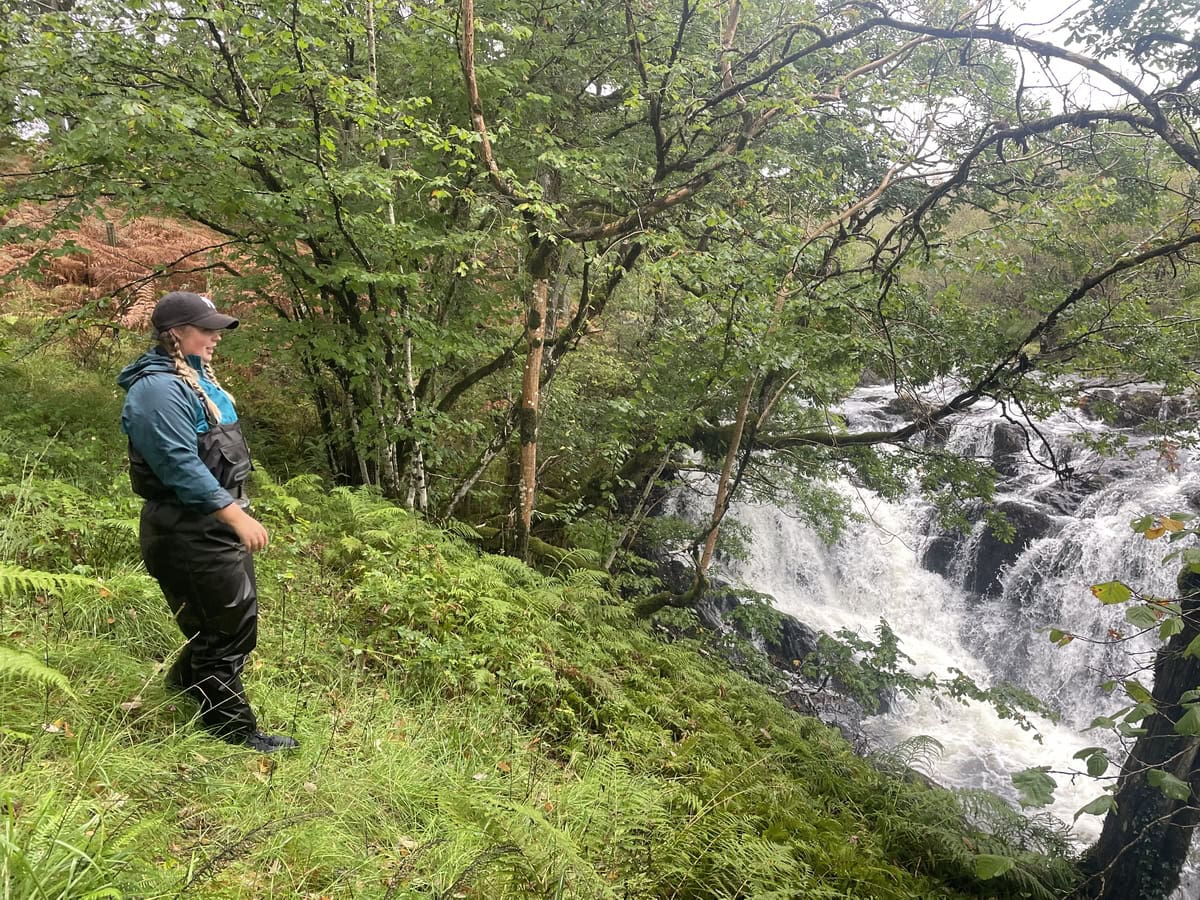
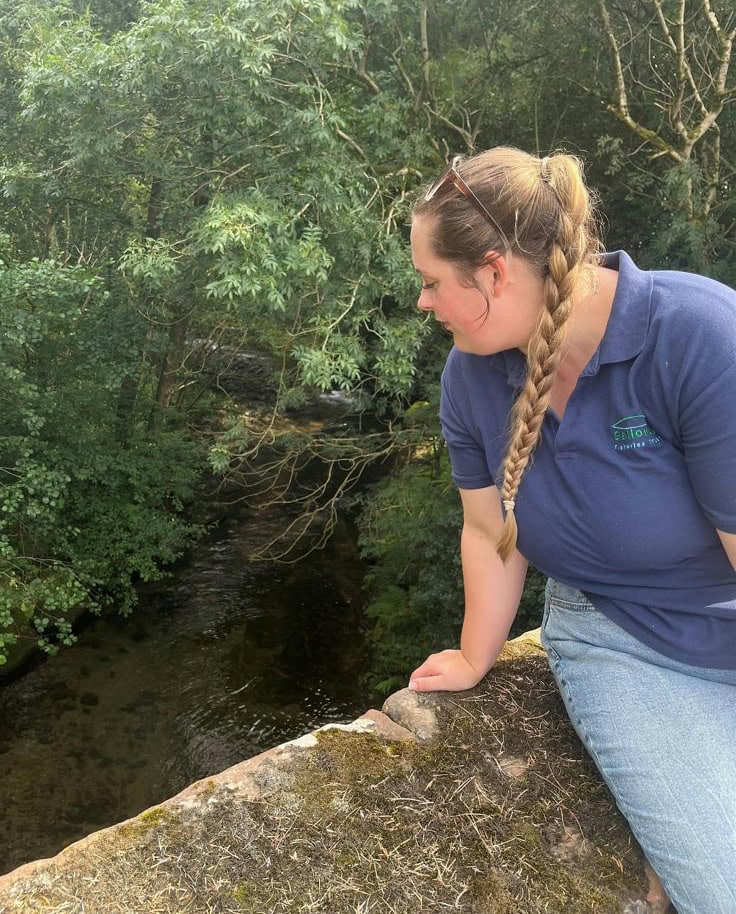
My favourite spot is a little stretch of the Lower Main Annan, near Hoddom Castle. It’s wide there with a really deep bit, where fishermen use it. When I was younger, that’s where we used to go and swim.
We used to take our horses down there and canter through the shallow bits and swim and jump off our horses into the deep bits. It’s such a big part of my childhood.
This summer I took my wee boy there for the first time because he can now swim. It’s got tree cover on one side, a little sandy beach on one side. It’s just really lovely. That’s my favourite place to go.
Have you had a standout wildlife moment?
This wasn’t actually on the river – it was out to sea. Last summer we were scoping out cameras for seabed camera surveys as part of the SCAMP project. On our way back in we passed a pod of about 30 bottlenose dolphins.
The sun was setting and we weren’t allowed to drive the boat too close to them, so we stopped. They were just diving around us and jumping and playing. It was such an amazing feeling to know that this is my job – I’m getting paid to sit here and watch these dolphins jump around.
I’ve always loved dolphins, so that was a key moment for me, just watching these dolphins play.
PERSONAL LIFE & INSPIRATION
If you weren’t doing this, what do you think you’d be doing instead?
I have absolutely no idea! This is honestly my dream job – I can’t imagine doing anything else.
Do you have a person or quote that inspires you?
Sir David Attenborough has been a big influence in my passion for the environment. But there are also local people who do the same thing, who just work on the river and have loved the river for their whole life.
Outside of work, what are your hobbies and how do you spend your time?
We have horses and dogs and chickens, and I spend a lot of time with my animals in nature. I take my little boy out and do things with him – nature stuff really. We go to the beach, go for walks.
He’s just learned to ride his bike, so that’s the kind of thing I do if I’m not at work. I like to be outdoors, and he just comes with me and enjoys it too!
It’s nice to have someone to teach all the little things you know. We go to the beach and look under rocks and I tell him all the different kinds of crabs and shrimp, and he’s really interested and he cares. Then he’s just as happy to throw stones in while I look at different types of seaweed.
Does he pass that knowledge on as well?
He does tell other people things he’s learnt- it’s really cute. He’s becoming a little teacher too and loves telling others what he’s learnt.
It’s quite funny when that happens, when you’ve got a kid that’s actually telling adults about nature stuff they don’t know!
Thank you Emilie for a really enlightening interview, and I hope your story will encourage many young people to follow in your footsteps!